
Engaging kids in the wonders of science can be a delightful journey, and worksheets play a pivotal role in making this happen. These educational activities spark their imaginations and curiosity, blending fun with learning in a way that’s hard to resist.
By diving into hands-on experiments, young learners embark on exciting adventures where they can explore various scientific ideas.
With each worksheet, students have the chance to develop their critical thinking skills while making discoveries.
The magic of these tools lies in their ability to encourage interactive learning, prompting discussions and teamwork among peers. This collaborative approach not only helps build a strong foundation for future inquiries but also cultivates an environment rich in educational activities, interactive learning, hands-on experiments, inquiry-based learning, and critical thinking.
How Do Science Worksheets Promote Engagement Techniques
There’s something inherently exciting about getting hands-on with science activities. These interactive experiences not only spark curiosity but also set the stage for exploration in STEM education.
When kids dive into the material, they transform into active participants, igniting their own discovery learning journeys.
Worksheets with guided questions stimulate critical thinking, allowing students to uncover concepts on a deeper level.

Incorporating practical tasks into worksheets offers students opportunities to tackle problems at home or in class, often leading to thrilling experiments that boost cognitive development.
By integrating visuals and illustrations, these resources cater to different learning styles, ensuring every student stays engaged. Plus, collaborative activities foster teamwork, turning science into a shared adventure, where they can hone their problem-solving skills together and engage in STEM education through the scientific method, enhancing discovery learning and cognitive development.
Exploring Handson Experiments For Learning Outcomes
Imagine a world where kids dive right into their learning experiences. When they engage with interactive projects, curiosity is ignited, and complex science concepts become much more relatable.
Incorporating these activities into classroom routines can make a real difference in how students connect with what they’re learning.
As they dive into experimental procedures, they get to formulate hypotheses, making predictions about what might happen next.
This hands-on approach allows them to observe results firsthand, which reinforces their understanding and boosts retention. And let’s be honest—it’s a lot of fun! Simple projects can open the door to creativity while also honing skills like data analysis and teamwork.
Transitioning from worksheets focused on engagement techniques to practical applications can be seamless. When students work through these experiments, they’re not only enhancing their curriculum but also improving their understanding of visual aids, mastering experimental procedures, honing their data analysis skills, and refining their hypothesis formulation abilities.
| Engagement Techniques | Benefits of Hands-On Learning |
|---|---|
| Interactive Projects | Enhances understanding of complex concepts |
| Experimental Procedures | Improves data analysis skills |
| Hypothesis Formulation | Boosts retention of information |
| Teamwork Activities | Fosters creativity and collaboration |
What Is Inquiry-based Learning In Science Worksheets?
Curiosity is a natural part of childhood, and fostering it can lead to fantastic discoveries. When children dive into science activities, they not only get to explore fascinating concepts but also develop science literacy as they ask questions and seek answers.
Working with worksheets isn’t just about completing tasks; it’s about nurturing a love for learning through hands-on experiences that engage their minds.
These activities guide young learners through various scientific inquiries, transforming abstract ideas into enjoyable tasks.
By promoting tactile learning and sensory exploration, lessons become memorable and fun.
Children have the opportunity to experiment, collaborate, and build foundational knowledge, ensuring they’re ready for future academic adventures
Enhancing Critical Thinking Through Educational Activities

Encouraging curiosity in young minds can set them on a path to deeper understanding. When we incorporate engaging classroom resources such as storybooks and interactive games, we ignite their imagination.
Hands-on learning experiences allow students to explore concepts and solidify their knowledge.
This type of student participation not only sparks questions but also fosters academic growth.
Engaging in interactive group activities promotes teamwork and communication, which are crucial for effective problem-solving. By creating an environment where exploration is embraced, we can significantly enhance learning outcomes.
It’s important to cultivate a space where inquisitiveness and analytical thinking can flourish.
Encouraging Curiosity in Learning
- Students who engage in hands-on learning experiences retain information better and develop a deeper understanding of concepts.
- Interactive classroom resources, such as storybooks and games, have been shown to increase student engagement and motivation.
- Group activities enhance communication skills and teamwork, essential for collaborative problem-solving in real-world scenarios.
- Creating an environment that fosters exploration can lead to improved academic performance and a lifelong love of learning.
The Role Of Scientific Method In Worksheets
Learning is an adventure, and worksheets can be a fantastic vehicle for exploration. When we weave in exploratory learning, it opens the door for kids to engage with new concepts and ideas.
Breaking down the process step by step—through observation, forming hypotheses, conducting fun experiments, and analyzing results—keeps children actively involved.
This method not only enhances their knowledge retention but also cultivates a genuine curiosity about how things work.
Worksheets packed with hands-on activities encourage children to jump into fun experiments, transforming learning into an exciting journey. As they dive deeper, they develop a skillbuilding that will support their growth in many areas of education. It’s all about making the experience interactive and fun through exploratory learning, skillbuilding, knowledge retention, fun experiments, and assessment tools.
Why Use Visual Aids For Conceptual Understanding
Learning becomes a whole lot more exciting when you bring visuals into the mix!. These engaging tools not only make the lessons more enjoyable but also enhance knowledge application, allowing them to transfer what they learn to real-life scenarios.
Isn’t it amazing how our brains are hardwired to process visuals quickly? A colorful diagram can clarify a tricky science concept way better than just a block of text ever could.
Plus, incorporating visual elements fosters peer collaboration among students, encouraging them to share thoughts and explore ideas together.
This approach truly transforms the learning experience, making it richer and more engaging for little ones.
Visual Learning
- Visuals can improve information retention by up to 65% compared to text alone.
- Incorporating visuals can lead to a 50% increase in student engagement during lessons.
- Students are 80% more likely to remember information presented with relevant images.
- Visual aids promote collaborative learning, with studies showing increased participation in group discussions.
How Can Experimental Procedures Boost Science Literacy?
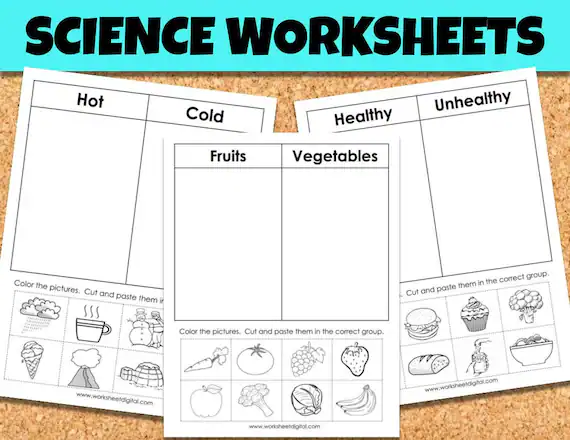
Diving into experiments ignites a spark of curiosity in children, reshaping their learning journey. Engagement Through Hands-On Learning: When kids get hands-on with experiments, abstract scientific ideas become much more relatable.
Think about it: learners transition from being passive observers to active participants in their education.
Utilizing educational worksheets can create a fun and interactive experience, guiding them through each step of the process.
Enhancing Problem-Solving Skills: Experimentation plays a significant role in fostering creativity in science. These experiences not only help kids develop their problem-solving skills but also enhance their grasp of scientific reasoning, ultimately allowing them to connect the dots in their learning journey. As we shift from using visual aids for creativity in science to incorporating educational worksheets that promote conceptual understanding and enhance scientific reasoning through formative assessment, we can foster a deeper learning experience.
Facilitating Student Participation With Interactive Learning
Engaging students in their educational experience is a game changer. A fantastic avenue to achieve this is through active learning.
Hands-on activities not only make lessons more exciting but also encourage knowledge exploration.
For instance, project-based learning allows kids to dive into real-world problems.
They can collaborate, think critically, and develop research skills. You’ll see their eagerness to participate grow when they’re fully engaged.
Plus, when students feel included, their confidence skyrockets. Fostering that sense of belonging is key to keeping every voice heard.
Consider using creative, interactive techniques that fit your curriculum seamlessly.
Fun activities can spark curiosity and keep lessons lively. By blending science concepts with playful learning, you can create a dynamic environment for project-based learning that fosters knowledge exploration, enhances active learning, and develops essential research skills.
Active Learning
- Active learning can improve student retention rates by up to 60% compared to traditional lecture-based approaches.
- Project-based learning encourages collaboration, with studies showing that students engaged in group work perform better on assessments.
- Research indicates that hands-on activities can increase student motivation and engagement, leading to higher overall academic performance.
- Students who feel a sense of belonging in the classroom are more likely to participate and succeed, with a direct correlation to their confidence levels.
Conclusion
As we wrap up our discussion, it’s a great moment to look back over the fascinating path we’ve traveled. Engaging kids through educational play not only makes learning enjoyable but also sparks their motivation in learning.
When little ones participate in hands-on activities, they aren’t merely memorizing; they’re diving into a systematic investigation of the world around them.
This form of demonstrative learning empowers them to understand complex ideas more intuitively.
While reflecting on these curriculum resources, consider how they align with various learning styles. How can parents and educators inspire their use at home or in the classroom? Let’s keep the dialogue flowing and encourage our young learners to discover joy in every lesson through motivation in learning, systematic investigation, educational play, demonstrative learning, and utilizing curriculum resources.
Originally posted 2025-04-13 23:30:28.


Comments are closed