
Have you ever thought about how much fun it can be for kids to learn about time? Calendar activities worksheets make this learning journey enjoyable and interactive. These resources transform the concept of managing time into something playful, allowing children to engage with their days like never before.
With hands-on calendar activities, kids dive into creating daily schedules, plotting out weekly plans, and even putting together monthly planners. As they fill out these educational worksheets, they develop a sense of ownership over their time, which really boosts their confidence! Not only do they become more organized, but they also pick up valuable time management skills that help them navigate their calendar activities, create effective monthly planners, and maintain daily schedules.
Understanding Calendar Activities For Kids

Getting kids involved in planning their days can spark a whole new level of excitement about learning. Through engaging with calendars, children can develop their organizational abilities while grasping important time concepts.
Simple activities such as marking special occasions or tracking daily routines empower them to see how events fit into the larger picture.
This interaction with valuable learning tools not only enhances their understanding of date recognition but also ignites enthusiasm around planning ahead.
Let’s explore some activities that can make this educational journey both enjoyable and rewarding for kids!
Why Calendar Activities Matter:
-
- Calendar activities help kids know what to expect over time.
- Learning becomes fun as they see their organizational abilities improve through engaging learning tools that enhance children’s education and foster a better understanding of time concepts and date recognition.
How Do Monthly Planners Aid Learning
Using planners can transform how kids approach their studies. With a clear layout of days, weeks, and months, these visual aids allow them to see time’s rhythm more intuitively.
It’s like giving them a map for navigating their academic resources, helping to enhance their understanding of what lies ahead.
By engaging with a monthly planner, children also build essential organizational skills.
As they outline their lesson plans, they learn responsibility and accountability along the way.
This practice often leads to improved focus and task completion, making learning feel more rewarding. Plus, these planners act as interactive learning tools that enrich their educational experience
Using Planners for Kids
-
-
- Planners help children visualize their time, improving their time management skills.
- Engaging with planners fosters a sense of responsibility and accountability in students.
- Using a planner can lead to enhanced focus and increased task completion rates.
- Planners serve as interactive tools that enrich the overall educational experience.
-
Importance Of Daily Schedules In Education
Creating a structured routine can significantly enrich the learning experience for children. For young learners, routines foster a sense of stability and security.
This predictability contributes to cognitive development, as students become familiar with what’s in store each day.
When classroom activities are organized, kids can dive deeper into their studies instead of wondering about the next step.
A well-implemented schedule makes it easier to focus on goal setting and accomplishing tasks efficiently. Over time, this practice builds confidence as children learn to manage their time tracking effectively.
Overall, a well-structured routine enhances learning and encourages the development of important skill enhancement that prepare them for the future
Enhancing Time Management Skills With Worksheets
Helping kids grasp the concept of time management can turn into a delightful journey, especially with the right resources. Engaging activity sheets play a crucial role in allowing children to visualize their tasks and daily routines.
They simplify complex ideas into manageable parts, making learning both fun and effective.
With engaging activities, these tools keep children interested while developing important skills.
For instance, simple calendar activity sheets can aid children in understanding the flow of days and night and seasonal changes throughout the year.
Daily planners encourage them to prioritize what needs to be done. By integrating these activity sheets into their everyday lives, you empower kids to become more independent and boost their confidence as they approach developmental milestones through experiential learning, day and night, while exploring seasonal changes.
Time Management for Kids
-
-
- Engaging activity sheets help children visualize tasks and routines.
- Simple calendar activity sheets teach kids about days, nights, and seasonal changes.
- Daily planners encourage prioritization and independence in children.
- Experiential learning boosts confidence as children reach developmental milestones.
-
What Are Effective Organizational Abilities
Helping kids develop strong skills for managing their activities can truly transform their everyday experiences. These abilities act like building blocks for success, allowing children to structure their time and tasks more effectively.
Think of task management as a fun game where kids learn to prioritize what they need to accomplish.
Through engaging scheduling exercises, they can see the importance of time intervals and how these fit into their daily routines.
When children can map out their activities step by step, they’re better equipped to stay on track and reach their goals. This approach can make school projects and home chores feel much more manageable and less stressful.
Now, let’s explore how worksheets can enhance these time management skills in a way that resonates with children. Worksheets encourage kids to practice organizing time intervals and scheduling exercises for effective task management and learning reinforcement in chronological order.
Engaging Children With Fun Activity Sheets

Who says learning has to be boring? With creative sheets filled with exciting tasks, kids can dive into a world where education meets play. These sheets offer hands-on practice, transforming standard lessons into captivating experiences.
When little ones tackle engaging activities, their focus sharpens, and their skills flourish.
By weaving in fun themes—like seasons or daily routines—children can discover a wealth of knowledge through puzzles and imaginative drawing games.
Encourage them to sprinkle in their own flair as they personalize their sheets, turning learning into a delightful adventure! Regularly using these resources not only amps up involvement but also helps kids build important abilities in a lively way.
Through these engaging activities, both parents and educators can instill a love for learning. Now, let’s explore how we can take this enjoyable approach further with task prioritization through hands-on practice, visual calendars, time awareness, and thematic units.
| Engaging Learning Methods | Benefits |
|---|---|
| Creative Task Sheets | Transform standard lessons into captivating experiences |
| Hands-on Practice | Enhances focus and skill development |
| Thematic Learning | Encourages discovery through fun themes |
| Personalization | Makes learning a delightful adventure |
Exploring Time Concepts Through Interactive Learning
Grasping the flow of time can be a fantastic adventure for kids, especially when we make it engaging. When children take part in hands-on activities, they not only learn but also achieve important learning objectives.
For instance, incorporating timers into games aids children in grasping seconds and minutes, turning the concept into something tangible and relatable.
Calendar activities serve as wonderful study aids in teaching how days, weeks, and months interconnect.
This keeps learning fun and dynamic! Kids can find joy in worksheets that transform time concepts into an exciting quest, perfectly age-appropriate for their development.
Through these interactive experiences, we’re not just imparting knowledge; we’re contributing to their overall child development.
Developing Time Awareness With Visual Aids

Teaching kids about time can be a joyful adventure, especially when you sprinkle in some visuals. Visual aids truly shine when it comes to routine establishment, making abstract concepts feel more tangible and engaging for young learners.
Tools like clocks and calendars become their companions on this journey, transforming the tricky idea of time into something more relatable.
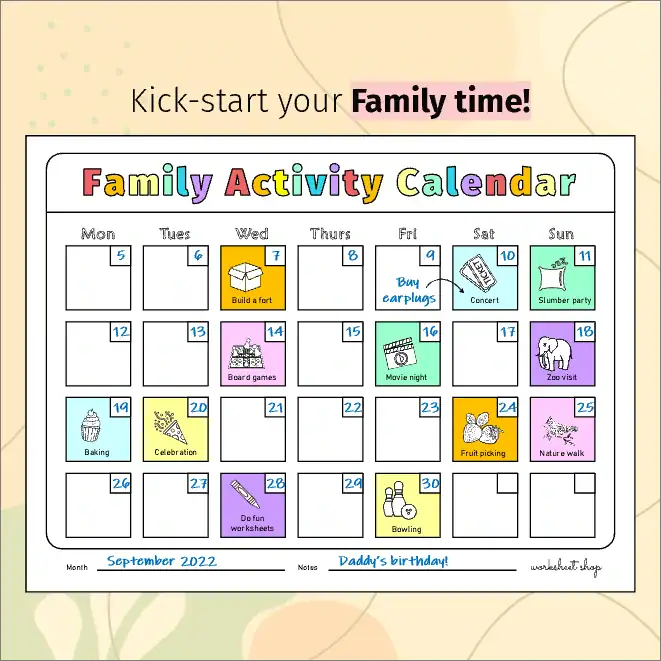
For example, when children see a calendar filled with activities, they can grasp the flow of their days and weeks much better.
Worksheets that encourage planning techniques become fun challenges, helping them map out their day. And let’s not forget about games! These enjoyable activities reinforce their learning experience, allowing kids to practice time estimation in playful settings. Such engaging methods not only help children develop a solid understanding of their daily routines but also cultivate a love for learning about time itself through routine establishment, calendar literacy, planning techniques, interdisciplinary activities, and time estimation.
Teaching Kids About Time
-
-
- Visual aids enhance routine establishment, making abstract concepts like time more tangible for children.
- Calendars filled with activities help children understand the flow of their days and weeks.
- Worksheets that promote planning techniques encourage kids to map out their day in a fun way.
- Games provide enjoyable opportunities for children to practice time estimation in playful settings.
-
Conclusion
Closing out a learning journey with your kids can be both rewarding and insightful. Engaging children with calendar activities is more than just fun; it’s about practical learning that sticks.
With structured worksheets, children can connect the dots between abstract concepts and real-world applications.
These skillbuilding exercises lay the groundwork for future success and aid in their overall development.
As you contemplate the role of parent-teacher resources, consider how group interactions can elevate the experience.
They provide a dynamic environment where kids can learn together and grow. So, how will you make learning about time an adventure in your child’s life through practical learning, holistic education, skillbuilding exercises, parent-teacher resources, and engaging group interactions?.
Originally posted 2025-04-30 23:30:10.


Comments are closed